Early organisation
The call for unity
CANEGROWERS was not formed out of ambition or convenience. It emerged because Queensland sugarcane growers needed a strong, independent voice to protect their livelihoods in an industry where power was unevenly distributed.
In the late 1800s and early 1900s, Queensland sugarcane growers were largely independent operators, carving farms from dense scrub and relying on physical labour to plant and harvest cane. While this independence offered opportunity, it also left growers vulnerable.
Mill owners controlled processing and access to markets, while growers had little influence over pricing or conditions. Individually, growers struggled to assert their interests in an industry that depended on coordination but lacked balance.
In response, growers began forming local associations to advocate collectively. These early groups recognised that unity offered leverage individual farms could not achieve alone.
As these local associations grew, there were calls for further unity.
In 1914, those calls became action with the formation of the United Cane Growers’ Association (UCGA) – a purely grower-focused organisation and the direct predecessor of today’s CANEGROWERS.
The message was blunt and unambiguous: “United we stand – divided we fall.”
Growers recognised that mill owners and workers were organised to protect their own interests. If growers were to survive, they needed to do the same.
UCGA leaders argued that unity was not optional – it was essential to ensuring fair prices, enforceable agreements and long-term viability for cane farming families.

The first Council
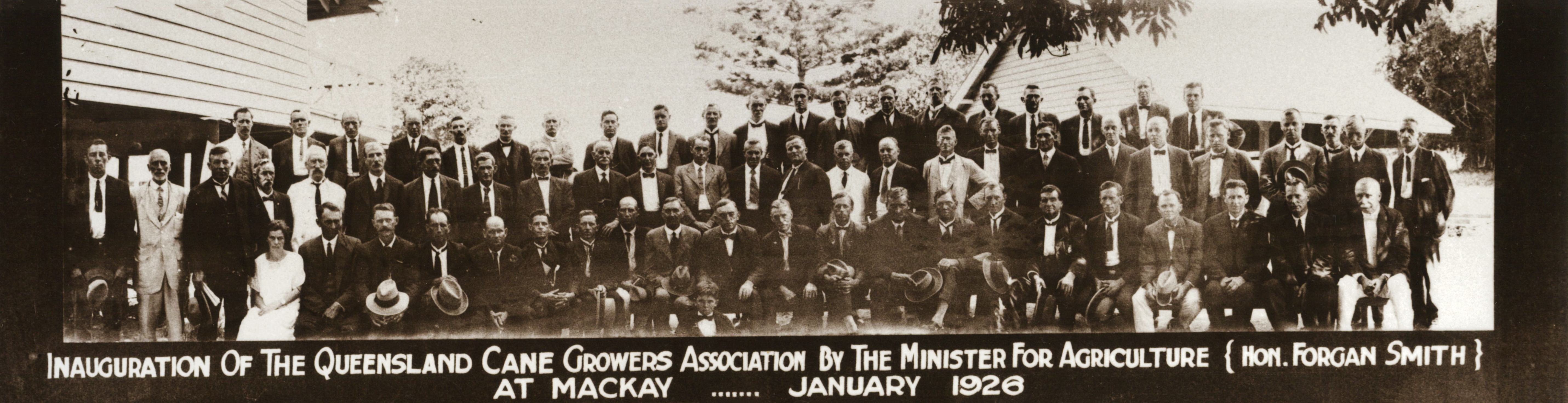
The first meeting of the Queensland Cane Growers Council was held in Mackay on 21 January 1926.
Grower representatives from across Queensland attended, laying the groundwork for a structure that would endure for generations – with district representation, elected leadership and a clear mandate to act in growers’ interests.
Mackay grower George Johnson was appointed Chairman, and W.H. (Bill) Doherty became General Secretary later that year. Doherty would go on to shape grower advocacy for decades, firmly rejecting claims that the organisation was government-controlled.
CANEGROWERS, he argued, existed for growers – and only for growers.

An enduring purpose
Over the past century, the sugar industry has changed dramatically. Markets have globalised, ownership structures have evolved and regulatory frameworks have shifted.
Yet the core reason CANEGROWERS exists has remained constant. Wherever imbalance persists, growers need collective representation. That necessity — not tradition — is what continues to define the organisation today.

From Necessity to Collective Strength
What began as a practical response to imbalance became a defining commitment to collective action.
By organising locally and uniting at a state level, Queensland cane growers laid the foundations for a grower-led organisation built on cooperation, resilience and shared purpose. Over time, CANEGROWERS evolved alongside the industry – navigating regulation, reform and change – while remaining grounded in the same principle that drove its formation: growers are strongest when they stand together.
A century on, that necessity still shapes CANEGROWERS’ purpose and presence – not as a historical moment, but as a living organisation shaped by the growers it represents.